

Sunday has a strange reputation. Half of it disappears into low-grade dread of Monday, and the other half goes to laundry, errands, and the vague feeling that you should be doing something more restorative with your one free day. By evening you're somehow both restless and tired.
A Sunday ritual is a small correction to that. Not a self-improvement project, not a colour-coded planner — just a short set of repeated actions that make the day feel like it belongs to you. The trick is designing something so modest that it survives a week when you're behind on everything and slightly grumpy. That's the real test. Not whether it's lovely in June, but whether it still happens in February.
Why Sunday, and why most rituals collapse
Sunday is the natural seam in the week. Saturday is for doing; Sunday is for the transition back. That makes it an easy place to attach a habit, because the day already feels different from the other six.
Most attempts fail for reasons that have nothing to do with willpower. They're built as a fantasy of a perfect day rather than a repeatable one. Three versions of this show up constantly:
- The routine has eleven steps, four of which require you to have been organised the night before.
- It's scheduled to the hour, so one slow breakfast knocks the whole thing over.
- It depends on buying something, going somewhere, or being in a particular mood.
None of those are moral failures. They're design errors. If a ritual can't run on a bad week, it isn't a ritual — it's a hobby you do when conditions are good.
Build around three anchors, not a schedule
An anchor is a small repeated action attached to something that already happens in your day. You don't need a timetable. You need three.
- Something for your body. Rest, a walk, a long bath, a nap with no alarm. One block of genuinely unused time.
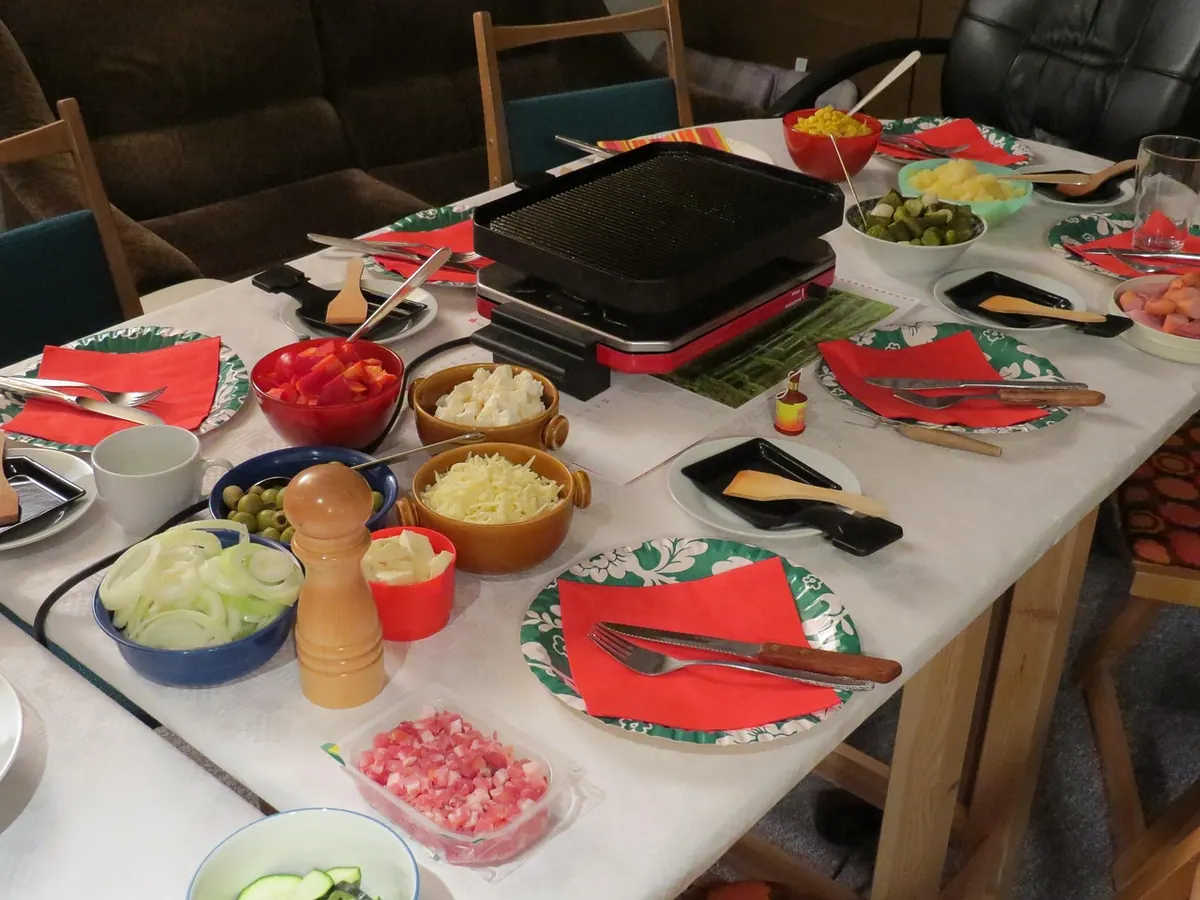
- Something for your table. A pot of something, a proper breakfast, a shared meal. Food is the easiest part of the day to make feel deliberate.
- Something for your head. Ten minutes with a notebook, a short look back at the week, one decision about what next week should contain.
Notice how little is in that list. No morning routine, no digital detox, no cold plunge. Three anchors, each under an hour, is plenty for the first two months. You can add more once the three have stopped requiring thought.
The food part: keep it repeatable
Sunday cooking gets romanticised into an entire afternoon of roasting and simmering, then abandoned because nobody has that afternoon. The version that sticks is duller and far more useful: one dish you make roughly the same way most weeks.
Pick something forgiving. A tray of vegetables and a pot of beans. A big pot of soup with bread. A chicken that becomes Monday's lunch. The point isn't the recipe. It's that the decision is already made, so by the time you're hungry you aren't negotiating with yourself.
- Keep a short standing shopping list for that one dish and buy it on Friday or Saturday, when the shop is calm.
- Cook enough for two meals. Sunday's cooking should reduce Monday's decisions.
- Keep one easy fallback in the cupboard for weeks you don't cook at all — tinned tomatoes, pasta, something in the freezer.
If you live with other people, this is the easiest anchor to share. One person cooks, one clears, nobody plans anything elaborate. That arrangement has kept far more Sundays intact than any meal plan.
The rest part: protect a block of nothing
Rest is the part people plan most and protect least. Two hours with nothing in them sounds indulgent until you try it and find you've filled them with a screen and a low hum of guilt.
Choose your two hours and treat them as booked. Put the phone in another room — not face down on the table, actually in another room. Don't schedule anything that requires you to be useful. Reading counts. Sleeping counts. Staring out of a window counts, and it's often what your brain needed most.
The harder skill is saying no to the thing at four o'clock. Drinks, a favour, an email that could wait until Monday. You don't have to decline everything; you just have to notice that the block of nothing is a real commitment, and that giving it away is a choice rather than something that happens to you.
The reflection part: ten minutes, three questions
This is where Sunday rituals either turn into a productivity system or quietly die. Keep it small. Same notebook, same chair, three questions, a couple of lines each.
- What actually gave me energy this week? Not what should have — what did.
- What drained me that I could shrink or drop next week?
- What's the one thing I want to be true by next Sunday?
Write by hand if you can. Not for mystical reasons; a paper notebook simply doesn't have notifications attached to it. Keep answers to a few lines. If you write a page, fine, but don't make that the standard you have to meet every week.
Then close the notebook. That last part matters. A review that stays open turns into brooding, and brooding is not reflection.
A ritual is a decision you make once, so you don't have to make it again on a day when you have no energy for decisions.
Make it flexible enough to survive a bad week
Here's what separates a ritual that lasts from one that fades by week four. Write down the rules you'll follow when things go wrong, because they will.
- Define the minimum version now. Call it the twenty-minute Sunday: coffee made properly, one pot of something, three lines in the notebook. If the full version isn't available, the minimum still counts.
- Attach anchors to cues, not clock times. "After the second coffee" is more durable than "at 9:30", because it moves with your day.
- Miss once, don't redesign. A skipped Sunday means nothing. Two skipped Sundays followed by a new, more complicated plan is how rituals die.
- Review monthly, not weekly. Once a month, look at the whole thing and cut the part that feels like homework. Usually there's exactly one.
- Keep a short "no" list. Two or three things you've decided don't happen on Sunday. Enough to point at when you need to.
Try it this Sunday
Pick three anchors — one for rest, one for food, one for reflection. Write them on a piece of paper and put it where you make coffee, because that's where you'll see it at the moment it matters. Put the notebook on the table the night before. Take the phone out of the room for two hours in the afternoon.
The first three or four Sundays will feel slightly awkward, like a coat that hasn't been broken in. That's normal, and it isn't a signal to stop. After a month, look at what you actually did rather than what you planned to do. Keep the two anchors that came easily. Adjust or drop the one that got skipped. Repeat.
That's the whole system: three small things, most weeks, for a long time. It won't make Sunday perfect, and it isn't meant to. It just gives the day a shape you can come back to when the rest of the week is competing for your attention.
Photo: Rachel Claire / Pexels